How to Wash Clothes in a Hotel Sink for Fast Drying
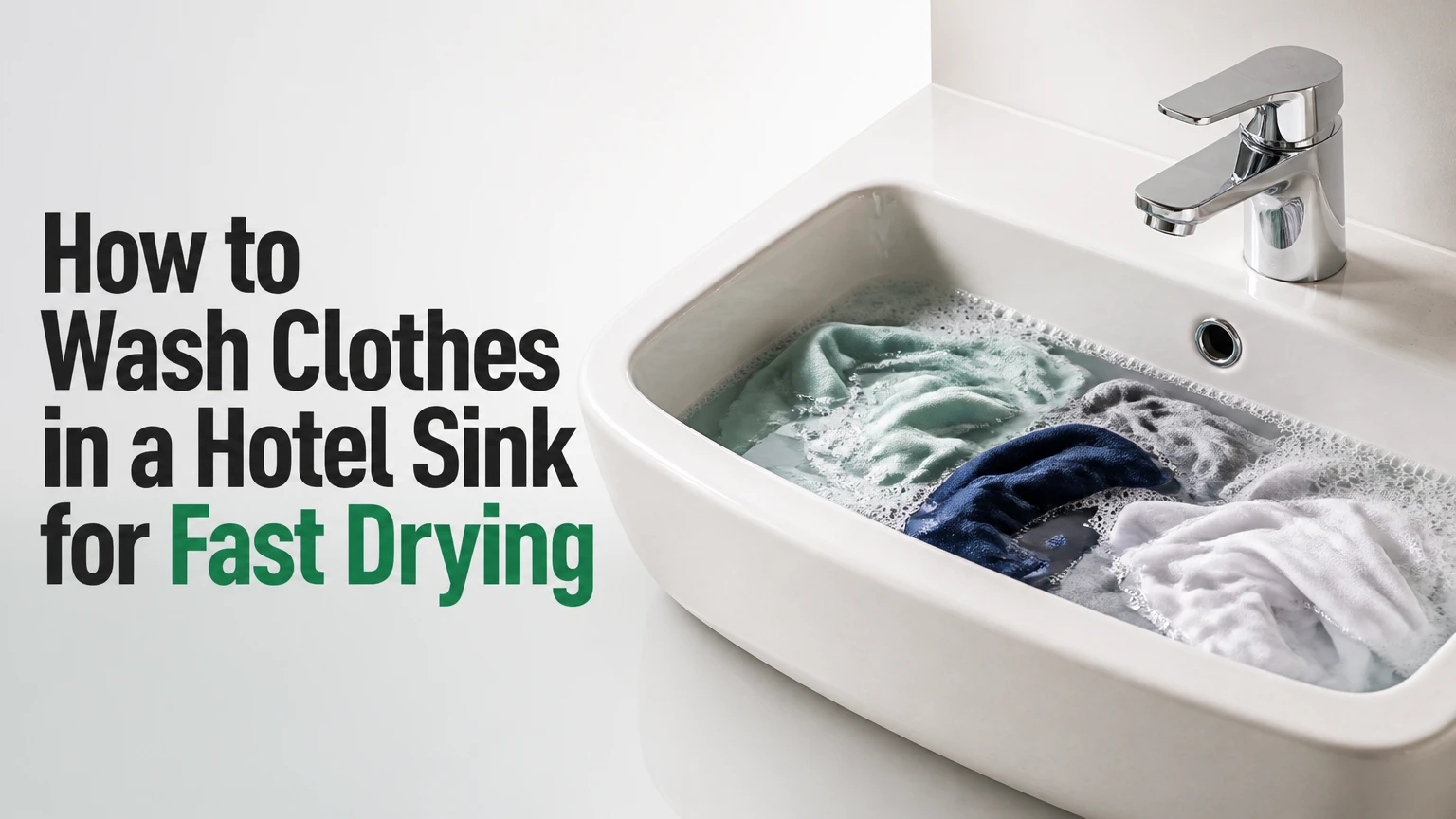
Hotel sink laundry is the manual cleaning of small garments in a bathroom basin using water, detergent, soaking, agitation, rinsing, and towel-assisted drying. To wash clothes in a hotel sink successfully, clean the basin, use lukewarm water and very little detergent, rinse until water runs clear, then dry garments with strong airflow rather than humidity.
Key Facts / Quick Answer
A practical sink load is 2-4 lightweight garments, or about 0.5-1 kilogram of fabric.
Use approximately 5 milliliters of liquid detergent or one-quarter of a laundry sheet per small load.
Soak for 5-15 minutes and knead garments for 2-3 minutes.
A tightly rolled hotel towel can remove substantially more water than hanging alone.
Typical drying takes 4-8 hours for thin synthetics and 12-24 hours for cotton or thick fabric.
Sink washing usually costs under USD 0.50 per load, excluding the room and your time.
What Makes Sink Laundry Work?
Sink laundry works because cleaning combines chemistry, contact time, water, temperature, and mechanical movement. Detergent loosens body oils and soil, soaking allows the solution to penetrate fibers, and kneading transfers loosened dirt into the water.
A bathroom basin is a temporary wash tub, not a substitute for a full washing machine. The method is most effective when the load is small, the garments are lightly soiled, and the fabric can tolerate hand washing. Underwear, socks, swimwear, lightweight shirts, and synthetic activewear fit those conditions.
Water temperature has a practical limit. Lukewarm water around 25-35°C usually dissolves detergent and body oils without increasing shrinkage or dye bleeding as much as hot water. The garment care label overrides any general temperature recommendation.
Mechanical action should be firm enough to move water through the fabric but gentle enough to preserve shape. Rubbing cuffs, armpits, waistbands, and sock soles targets high-soil areas without abrading the entire garment.
How Much Can a Hotel Sink Hold?
A hotel sink normally handles one small batch rather than a full travel wardrobe. Filling the basin beyond half to two-thirds of its usable depth leaves insufficient room for agitation and increases the chance of splashing or overflow.
| Load type | Typical quantity | Approximate dry weight | Suitable garments |
|---|---|---|---|
| Minimal refresh | 1-2 items | 100-250 g | Bra, shirt, swimwear |
| Small daily load | 2-4 items | 250-500 g | Underwear, socks, synthetic shirt |
| Maximum practical load | 4-6 thin items | 500-800 g | Lightweight synthetics only |
| Heavy load | 1-2 items | 800 g-1.5 kg | Jeans, sweatshirt, thick cotton |
The maximum quantity depends on basin size, fabric thickness, and drain speed. If garments cannot move freely through the water, divide the batch.
How to Wash Clothes in a Hotel Sink
The reliable process has seven stages: inspect the care label, prepare the sink, dissolve detergent, soak and agitate, rinse, remove water, and dry with airflow. Completing the stages in that order limits dye transfer, detergent residue, and unnecessary drying time.
1. Sort and Inspect the Garments
Separate dark, bright, and white items for the first few washes of a new garment. Red, navy, black, and strongly dyed clothing can release color, especially in warm water.
Check every pocket and close zippers, hooks, and hook-and-loop fasteners. Turn printed shirts and dark clothes inside out. Remove detachable pads from bras and empty lint-heavy pockets before adding water.
Do not put these items into a shared hotel sink without a barrier or alternative:
- Garments contaminated with vomit, feces, blood, or other body fluids
- Clothing affected by bedbugs, fleas, or suspected fungal infection
- Oil-soaked fabric or clothing with strong chemical contamination
- Heavy coats, down garments, leather, suede, and structured tailoring
- Items labeled dry clean only, unless the care label specifically permits a hand wash
Sink washing cleans routine travel soil. It does not reliably disinfect contaminated clothing.
2. Clean and Test the Basin
Rinse the basin to remove toothpaste, hair, cosmetics, and cleaning residue. Wipe the bottom and sides with a clean disposable tissue or the room’s clean hand towel, but do not use a towel that you plan to dry clothes with.
Inspect the drain stopper before filling the sink. A stopper that leaks slowly is useful because it lets dirty water drain without lifting a wet load, but a rapid leak makes soaking inefficient.
Run the tap briefly and check the water color and smell. Brown, cloudy, or strongly chlorinated water can affect white fabric and sensitive skin. In that situation, use a portable wash bag or ask housekeeping for a clean basin solution.
3. Add Lukewarm Water and the Correct Detergent
Fill the sink with enough lukewarm water to cover the garments after they are submerged. A typical small load needs approximately 8-15 liters, although basin volume varies considerably.
Use 5 milliliters of liquid detergent, one-quarter of a concentrated laundry sheet, or the smallest dose stated on the product label. Travel laundry sheets are convenient because they do not spill, but tear them into portions before packing rather than guessing after they contact water.
Dr. Bronner’s product label uses the instruction, “Dilute! Dilute! Dilute!” That principle matters in a hotel sink because concentrated soap is harder to rinse from fabric than it is to add.
Avoid dish soap for routine laundry. Dishwashing liquids are formulated for grease removal and can create excessive foam, while shampoo may contain conditioners, oils, or fragrance that remain in fabric. Unscented laundry detergent is the safer general choice for skin-contact garments.
4. Soak and Agitate the Fabric
Place the garments into the solution one at a time and press out trapped air. Leave them submerged for 5-15 minutes, depending on soil level and fabric.
Knead and swish the load for 2-3 minutes. Push each item below the surface, compress it repeatedly, and move the water through armpits, collars, waistbands, and soles. Rub a stained area against itself only when the care label permits friction.
For a single heavily soiled area, apply a drop of diluted detergent directly and wait 5 minutes before gentle rubbing. Do not scrub aggressively at blood, protein, or dye stains because heat and friction can set or spread them.
A second short agitation period often works better than a longer initial soak. The first movement releases loose soil; the second movement reaches residue after the water has carried away surface dirt.
5. Rinse Until the Water Is Clear
Drain the wash water completely before rinsing. Press the clothing against the basin to remove some dirty solution, but do not twist it into a rope.
Refill the sink with clean water, knead the garments for about 30 seconds, and drain. Repeat two or three times until the water has no visible suds and the fabric no longer feels slippery.
Running water can provide a final rinse, but use a low flow to reduce splashing and water waste. Hold each garment under the stream while gently squeezing from top to bottom. Keep underwear and other small items away from the faucet aerator if the fixture appears dirty.
6. Remove Water Without Stretching Fibers
Water removal determines drying speed more than the wash cycle does. Lay one garment flat on a dry bath towel, roll the towel tightly from one end, and press along the roll with your hands or body weight.
Unroll the towel, turn the garment over, and repeat with a dry section. For several garments, use separate towel layers instead of placing a wet pile inside one roll. A saturated towel stops absorbing water.
Never wring bras, merino wool, rayon, knitted garments, or elastane-rich activewear. Pressing protects garment shape; twisting places concentrated stress on seams and elastic.
7. Dry With Airflow
Hang garments where air moves freely, such as near an air-conditioning outlet, room fan, open window, or dehumidifier. Leave space between items so damp surfaces do not touch.
Use hangers for sturdy woven shirts, but hang knitwear and heavy items flat when stretching is a concern. Clip shirts at the lower hem when possible to reduce shoulder marks. Do not place wet fabric directly on painted wood, polished furniture, or a radiator.
A bathroom exhaust fan helps only when the door is partly open and the fan actually vents outdoors. A closed, steamy bathroom often dries clothes more slowly than a cooler bedroom with moving air.
Which Sink-Washing Method Fits the Situation?
The standard basin soak is the best general method for a small hotel load. A wash bag improves containment and agitation, while a shower rinse is appropriate only for a quick refresh of a nearly clean, lightweight garment.
| Method | Practical load | Active time | Typical drying effect | Best use |
|---|---|---|---|---|
| Sink soak | 2-4 thin items | 10-20 minutes | Normal air drying | Underwear and shirts |
| Improvised sink plug | 2-4 thin items | 10-20 minutes | Normal air drying | Basin without stopper |
| Portable wash bag | 3-6 thin items | 5-15 minutes | Similar to sink soak | Shared or awkward sinks |
| Shower rinse | 1 lightweight item | 3-5 minutes | Fast if towel-pressed | Sweat refresh, not deep cleaning |
What If the Sink Has No Stopper?
Use a purpose-made universal sink stopper when possible. It is more reliable and hygienic than paper or a loose plastic bag.
If no stopper is available, place a clean, water-filled plastic bag over the drain and hold it down with a flat, clean object that cannot scratch the basin. Test the seal with only a few centimeters of water before adding clothing.
Do not pack toilet paper into a drain. Paper can break apart, enter the plumbing, and create a blockage. A plastic bag can also float away and expose the drain, so never leave an improvised seal unattended.
When Is a Portable Wash Bag Better?
A portable wash bag is useful when the sink is too shallow, the stopper leaks, or the traveler wants to contain splashes. Bags with textured interior panels create friction as the user kneads the load.
A wash bag still has a capacity limit. Overfilling reduces movement, traps detergent, and leaves inner layers less clean. Treat the bag as a small-batch tool, not a replacement for a laundromat when several days of heavy clothing have accumulated.
Which Detergent and Fabrics Work Best?
Low-foam, concentrated laundry detergent is the best choice for hand washing because a small dose cleans effectively and rinses with fewer water changes. Synthetics and lightweight merino usually outperform cotton for hotel laundry because they release water quickly and tolerate repeated gentle washing.
| Fabric or garment | Water guidance | Typical drying time | Main risk | Handling rule |
|---|---|---|---|---|
| Polyester or nylon | Lukewarm, 25-35°C | 4-8 hours | Odor retention | Rinse thoroughly |
| Merino wool | Cool to lukewarm | 6-12 hours | Felting or stretching | Press, do not rub |
| Cotton T-shirt | Lukewarm | 12-24 hours | Slow drying and shrinkage | Towel-roll twice |
| Elastane blend | Cool to lukewarm | 4-10 hours | Elastic degradation | Avoid hot water |
| Denim | Label permitting, cool water | 24-48 hours | Excess weight when wet | Wash one item only |
| Silk or rayon | Cool water only | 6-18 hours | Water marks and shape change | Follow the label exactly |
Merino wool resists odor because its fiber structure manages moisture differently from many synthetics, but it still needs careful handling. Do not leave wool submerged for an hour, and do not hang a wet sweater from one shoulder.
Cotton is the common source of failed travel laundry plans. A cotton shirt may feel almost dry at the collar while the seams and underarms remain wet. Pack fewer cotton pieces when daily sink washing is part of the itinerary.
How Much Detergent Should You Use?
Start below the normal machine-wash dose. The relevant ratio is detergent to water and fabric, not detergent to the number of garments alone.
| Product | Small sink load | Medium sink load | Rinse expectation |
|---|---|---|---|
| Liquid laundry detergent | 5 ml | 7-10 ml | 2-3 rinses |
| Concentrated laundry sheet | 1/4 sheet | 1/2 sheet | 2 rinses |
| Powder detergent | 1/2 teaspoon | 1 teaspoon | 2-3 rinses |
| Wool wash | 5 ml | 7 ml | 2 gentle rinses |
These are typical starting quantities, not universal label instructions. Hard water, heavily soiled fabric, and high detergent concentration can require adjustment, but adding more soap rarely solves a rinsing problem.
How Long Do Hotel-Washed Clothes Take to Dry?
Thin synthetic clothing typically dries in 4-8 hours after a thorough towel roll, while cotton takes 12-24 hours and denim can require 24-48 hours. Drying time depends on residual water, fabric thickness, room humidity, air movement, and temperature.
| Drying condition | Thin synthetic shirt | Cotton shirt | Jeans or thick fleece |
|---|---|---|---|
| Towel-rolled, fan or AC airflow | 3-6 hours | 8-16 hours | 18-30 hours |
| Towel-rolled, still bedroom | 6-10 hours | 12-24 hours | 24-48 hours |
| Hung in closed bathroom | 10-18 hours | 24-36 hours | 36-60 hours |
| High humidity, limited airflow | 12-24 hours | 24-48 hours | More than 48 hours |
These ranges are typical travel-planning figures, not guaranteed performance data. Check thick seams, waistbands, pockets, and folded hems before packing because those areas retain water after the outer surface feels dry.
If clothing remains damp after eight hours, improve the drying system rather than adding heat alone. Re-roll the garments in a dry towel, separate every layer, and move them into the room with a fan or air-conditioning airflow.
Do not drape wet garments over a portable heater or hot radiator. Excessive heat can damage elastane, shrink wool, soften adhesives, and create a fire hazard.
What Should You Pack for Sink Laundry?
A compact sink-laundry kit reduces improvisation and protects the room. The minimum useful kit contains detergent portions, a drain solution, a way to hang clothing, and a method for separating wet items from dry luggage.
| Item | Typical size or quantity | Packed weight | Function |
|---|---|---|---|
| Laundry sheets | 4-8 portions | 10-20 g | Low-mess detergent |
| Universal sink stopper | 1 unit | 30-60 g | Reliable water retention |
| Elastic clothesline | 1 line, 1.5-2 m | 50-100 g | Air drying without hangers |
| Mini clips | 4-8 clips | 15-30 g | Secure hems and socks |
| Mesh wet bag | 1 bag, 5-10 L | 40-100 g | Isolate damp garments |
| Small stain bar | 1 bar, 20-30 g | 20-30 g | Pretreat localized marks |
A travel towel can improve drying, but many hotel bath towels are more absorbent than a thin packing towel. Ask permission before using a white hotel towel on dark or strongly dyed garments, because dye transfer can create a housekeeping dispute.
Pack two or three lightweight quick-drying outfits rather than relying on one daily wash. That buffer covers slow drying, a broken stopper, or a day when no room airflow is available.
How Does Sink Washing Compare With Other Options?
Sink washing costs the least in direct cash and offers immediate control, but a laundromat handles larger or heavier loads more efficiently. Hotel laundry is convenient for business deadlines, while wash-and-fold services suit travelers carrying several days of clothing.
| Option | Typical direct cost | Typical turnaround | Practical capacity | Best decision |
|---|---|---|---|---|
| Hotel sink | USD 0.15-0.50 | 4-48 hours drying | 0.25-0.8 kg | Small urgent loads |
| Hotel laundry service | USD 10-40 per bag or order | 24-48 hours | Hotel-defined | Convenience and deadlines |
| Laundromat washer and dryer | USD 6-12 per full load | 1.5-3 hours | 6-10 kg | Heavy or accumulated laundry |
| Local wash-and-fold | USD 1.50-3.50 per pound | Same day to 48 hours | 2-10 kg | Several days of clothing |
| Portable wash bag | USD 40-70 purchase | 4-48 hours drying | 0.5-1 kg | Frequent travelers |
Prices are typical ranges in the United States and vary by city, hotel, garment count, and service tier. Hotel laundry menus can charge per garment, making a pair of socks disproportionately expensive compared with a full laundromat load.
Choose a laundromat when the load includes jeans, towels, sweaters, or more than 1 kilogram of fabric. Choose hotel service when clean clothing must be ready by a fixed meeting or departure time. Choose the sink when the load is small and drying time is available overnight.
What Problems Happen During Hotel Sink Laundry?
Most failures come from excess detergent, incomplete rinsing, poor water removal, or drying in stagnant humid air. A second group of problems comes from treating a sink wash as suitable for every garment and every kind of contamination.
| Problem | Likely cause | Immediate fix | Prevention |
|---|---|---|---|
| Sticky fabric | Too much detergent | Rinse 2-4 extra times | Start at 5 ml |
| Musty smell | Slow drying | Rewash and increase airflow | Dry outside the bathroom |
| Stretched garment | Wringing or hanging wet | Reshape flat while damp | Press in a towel |
| Color transfer | Mixed dark and light load | Rinse separately in cool water | Sort new dark garments |
| Overflowing sink | Basin overfilled or drain blocked | Stop water and remove clothes | Test stopper first |
| Itchy clothing | Fragrance or residue | Rinse with fresh water | Use unscented detergent |
Expert insight: The most useful drying measurement is not room temperature. It is how much water remains in the fabric after extraction. A towel roll can shorten drying more effectively than adding several degrees of heat.
Expert insight: Small loads need less detergent than many travelers expect because the sink contains less fabric and water than a washing machine. Excess soap increases rinse cycles and can lengthen drying by leaving moisture-attracting residue.
Expert insight: A garment that smells sweaty may need better rinsing rather than more detergent. Fragrance can mask odor temporarily, while trapped detergent and body oils remain near synthetic fibers.
What If the Clothes Still Smell After Washing?
Rewash the affected garment with cool or lukewarm water and a smaller detergent dose. Agitate the armpits, collar, and waistband directly, then perform an additional rinse.
Do not combine chlorine bleach, ammonia, vinegar, or other cleaning chemicals in a hotel basin. Chemical mixing can release irritating gases and damage fabric. If odor persists after two washes, use a laundromat’s complete wash cycle or replace the garment.
What If a Garment Bleeds Color?
Separate the bleeding item immediately and rinse it in cool water. Do not use hot water or place it in a dryer, because heat can make transferred dye harder to remove.
Test a strongly colored garment by pressing a damp white tissue against an inside seam. Visible color indicates a higher transfer risk, although a clean test does not guarantee colorfastness after soaking.
Can You Wash Underwear Safely in a Hotel Sink?
You can wash lightly soiled underwear safely when the basin is visibly clean, the detergent is appropriate, and the garments receive a complete rinse and thorough dry. Use a separate batch for underwear rather than mixing it with visibly dirty outerwear.
Do not treat a sink wash as sterilization. Ordinary detergent and rinsing remove soil, but they do not guarantee destruction of every pathogen. Wash contaminated underwear through a machine with the temperature and product specified by the care label.
When Should You Use the Shower Instead?
A shower rinse is suitable for one lightweight garment that needs a sweat refresh, not for a full wash or heavily soiled clothing. Rinse the garment separately, apply a small amount of detergent, massage briefly, and rinse it completely before towel-rolling.
Wearing clothing while showering is inefficient and can spread body soil back into the garment. It also makes it difficult to control water temperature, rinse detergent fully, and prevent the item from falling onto a contaminated floor.
A shower is useful when the sink is occupied, the drain stopper is missing, or the garment must be rinsed immediately. A wash bag is cleaner and more controlled when one is available.
Frequently Asked Questions About How to wash clothes in a hotel sink
Can I wash jeans in a hotel sink?
You can hand wash one pair of jeans if the care label permits it, but jeans are a poor choice for overnight sink laundry. Denim absorbs substantial water, becomes heavy, and may need 24-48 hours to dry. Use cool water, a small detergent dose, two towel rolls, and strong airflow.
Is it okay to use hotel shampoo as laundry detergent?
Hotel shampoo can clean a lightly soiled item in an emergency, but it is not ideal for regular laundry. Shampoo may contain conditioners, oils, fragrance, or silicone that increase residue. Use approximately 5 milliliters only, rinse repeatedly, and avoid it for sensitive skin or technical clothing.
How often should I wash travel clothes in the sink?
Wash underwear, socks, and sweaty activewear after each use, while lightly worn outer layers may last two to three wears when aired between uses. Small batches every two to three days prevent a sink from becoming overloaded and preserve enough drying time.
Can I dry clothes with a hotel hair dryer?
A hair dryer can spot-dry seams, cuffs, and waistbands, but it is inefficient for an entire garment. Keep the dryer moving, use a low or warm setting, and hold it away from elastane, wool, printed areas, and adhesives to prevent heat damage.
How can I wash clothes without wasting water?
Use one wash basin containing 8-15 liters, then two or three smaller rinse changes rather than leaving the tap running. A low-flow final rinse, a properly sealed stopper, and a small load reduce water use while still removing detergent.
Should I wash clothes in the hotel bathtub instead?
A bathtub is useful for one large item, but it usually requires more water and has a larger potentially contaminated surface. A clean sink is more efficient for small garments. Use the bathtub only after rinsing it thoroughly, and never leave an unattended filled tub.
Conclusion
To wash clothes in a hotel sink, limit each batch to 2-4 lightweight garments, use lukewarm water and about 5 milliliters of low-foam detergent, soak for 5-15 minutes, agitate gently, and rinse until no suds remain. Press the clothes in a dry towel, then dry them in moving air outside the bathroom. For jeans, thick cotton, contaminated clothing, or loads above 1 kilogram, a laundromat is usually the safer and faster choice.