How to Cure Motion Sickness Fast: A Practical Guide
Motion sickness is a temporary brain response to conflicting movement signals from the inner ear, eyes, and body. There is no universal instant cure, but stopping visual conflict, stabilizing the head, getting cool air, and choosing an appropriately timed medicine can reduce symptoms within minutes to hours.
Key facts
Close nearby screens and look toward the horizon, or close your eyes and rest your head against a stable surface.
Dimenhydrinate usually starts working in about 30-60 minutes; meclizine commonly takes about 1 hour and lasts longer.
A scopolamine patch is preventive, not an emergency rescue treatment. It generally needs several hours before travel.
Do not drive, cycle, or operate machinery after taking a sedating antihistamine.
Fresh air, a forward-facing seat, small sips of fluid, and an empty stomach are not equivalent strategies. Use them in the right order.
Severe dehydration, fainting, chest pain, new weakness, severe headache, or persistent vertigo requires medical assessment.
What Motion Sickness Is and Why It Happens
Motion sickness is nausea, dizziness, sweating, pallor, headache, or vomiting caused by incompatible information about movement. The vestibular organs detect acceleration and rotation, the eyes report the visual scene, and proprioceptive receptors report body position; the brain must reconcile all three streams.
The inner ear contains semicircular canals and otolith organs that detect rotation and linear acceleration. When a car turns, a boat rolls, or an aircraft banks, those organs signal movement even if the eyes see a stationary book, cabin wall, or phone. The mismatch activates brain networks involved in balance and nausea.
The poisoning explanation is a useful historical model, not a complete biological account. Current clinical guidance focuses on sensory conflict, vestibular stimulation, autonomic responses, and individual susceptibility rather than treating motion sickness as literal toxin detection. The CDC Yellow Book describes motion sickness as “a normal response to an abnormal stimulus.”
Head motion can intensify symptoms because it adds changing vestibular signals to an already conflicting visual scene. Predictable movement may become easier with repeated exposure, which explains why some sailors adapt after several days while others remain susceptible.
Common symptoms and their usual sequence
Symptoms often begin with warmth, yawning, salivation, fatigue, or a vague stomach unease before nausea becomes obvious. Sweating, pallor, dizziness, headache, belching, and vomiting can follow.
| Symptom | Typical onset | What it indicates | Immediate response |
|---|---|---|---|
| Yawning, warmth, fatigue | 5-20 minutes | Early autonomic response | Stop reading and face forward |
| Nausea, excess saliva | 10-30 minutes | Active sensory conflict | Recline, stabilize head, use cool air |
| Dizziness, imbalance | During movement | Vestibular stimulation | Close eyes and avoid walking |
| Vomiting | Variable, often later | Severe gastric and autonomic response | Turn sideways, rinse mouth, rehydrate gradually |
| Headache, lingering fatigue | 1-12 hours afterward | Recovery phase | Rest, fluids, and medical review if persistent |
What to Do When Symptoms Start
The fastest non-drug response is to remove the visual mismatch and reduce head movement. In practice, the order matters: stop looking at nearby objects, face the direction of travel, stabilize your head, cool your face, and avoid sudden standing.
- Stop reading and put away the phone. A screen held 30-50 centimeters from the face creates a strong stationary visual reference during movement.
- Look at a distant stable point. In a car, use the road and horizon. On a boat, look toward the true horizon rather than the deck. On an aircraft, use a distant outside view when practical.
- If looking outside worsens symptoms, close your eyes. Recline safely and rest the back of your head against the headrest or seat.
- Increase cool airflow. Aim an air vent at the face or move to fresh air only when it is safe and supervised.
- Keep the head still. Avoid bending down, turning rapidly, or walking through a moving vehicle.
- Take small sips of water after vomiting. Begin with a few milliliters every few minutes, then increase slowly if nausea settles.
- Use medication only according to its label or a clinician’s instructions. Do not repeat a dose simply because relief has not appeared yet.
Drivers often experience less motion sickness because they see the road and anticipate turns, braking, and acceleration. That does not make driving a rescue treatment when a person is already dizzy or impaired. A sick passenger should not take a sedating medicine and then drive.
Rescue actions by environment
| Environment | Best position | Visual target | Useful adjustment | Avoid |
|---|---|---|---|---|
| Car or bus | Front passenger seat, if permitted | Road far ahead | Smooth ventilation and head support | Rear seat reading |
| Train | Forward-facing seat near the center of the carriage | Distant outside view | Face direction of travel | Looking down at a screen |
| Large ship | Lower deck near the middle of the vessel | Open horizon | Lie down if symptoms escalate | Bow, stern, and upper decks |
| Airplane | Seat over the wing | Outside horizon when available | Cool cabin air and minimal head movement | Alcohol and prolonged reading |
| Virtual reality | Seated, stable posture | Fixed virtual reference | Reduce field of view and movement intensity | Continuing through nausea |
Which Type of Motion Sickness Are You Experiencing?
Car sickness, seasickness, airsickness, and virtual motion sickness share a sensory-conflict mechanism, but the strongest trigger differs by setting. Matching the intervention to that trigger improves the chance of rapid relief.
- Land motion sickness: Stop-and-go traffic, winding roads, rear seats, and reading are common triggers.
- Seasickness: Rolling, pitching, and heaving can continue for hours, especially on the bow or upper decks.
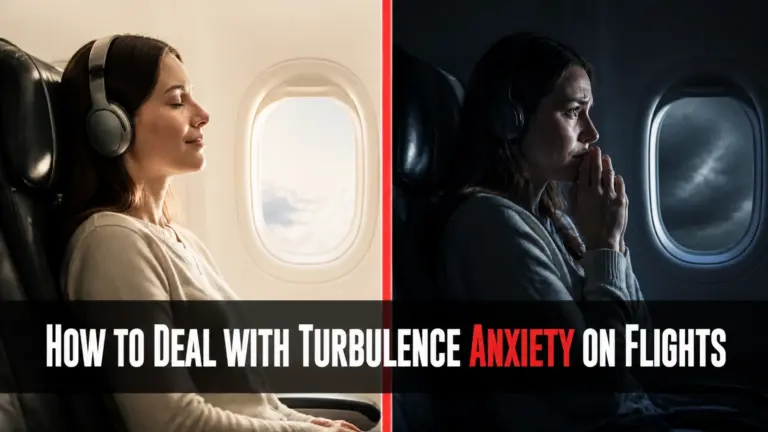
- Airsickness: Turbulence, banking, and poor access to a visual horizon can trigger symptoms.
- Virtual motion sickness: A headset shows movement while the body remains still, producing visual-vestibular conflict.
- Post-motion symptoms: Dizziness or rocking after leaving a boat can last for hours; persistent symptoms are not automatically ordinary motion sickness.
| Type | Dominant conflict | Highest-risk situation | First adjustment | Typical recovery |
|---|---|---|---|---|
| Car or bus | Inner-ear movement versus near-field vision | Reading in a rear seat | Face forward and look far ahead | Minutes to several hours |
| Boat | Continuous low-frequency rolling | Bow or upper deck | Move midship and lower | Hours after motion stops |
| Airplane | Turbulence and banking without horizon | Windowless or rear seat during turbulence | Stabilize head and use cool air | Usually within hours |
| VR or simulator | Visual movement without body movement | High-speed scenes or low frame rate | Remove headset and rest | Often 15-60 minutes |
| After-disembarkation | Ongoing vestibular recalibration | Long sea journey | Rest and avoid rapid head turns | Hours, sometimes longer |
Which Medication Works Fastest?
Dimenhydrinate and diphenhydramine usually provide the quickest oral drug option, often within 30-60 minutes, but both can cause substantial drowsiness. Meclizine generally lasts longer and may be less sedating for some people, while scopolamine is designed mainly for prevention several hours before exposure.
Motion-sickness medicines work best before symptoms become severe. Once nausea slows stomach emptying, an oral tablet may be absorbed slowly, vomited before absorption, or provide relief too late. Never combine multiple antihistamines or add alcohol to improve the effect.
| Medicine | Typical oral or patch onset | Typical duration | Main trade-off | Driving suitability |
|---|---|---|---|---|
| Dimenhydrinate | 30-60 minutes | 4-6 hours | Frequent drowsiness and dry mouth | Poor until individual effects are known |
| Diphenhydramine | 30-60 minutes | 4-6 hours | Strong sedation and impaired coordination | Poor |
| Meclizine | About 1 hour | Up to 24 hours | Longer exposure to dry mouth or sleepiness | Not automatically safe |
| Scopolamine patch | Several hours, commonly applied before travel | Up to 72 hours | Prescription, blurred vision, dry mouth | Ask a clinician |
| Ginger product | About 15-30 minutes, variable | Often 2-4 hours | Evidence and effect are inconsistent | Usually does not impair alertness |
The CDC Yellow Book lists first-generation antihistamines and scopolamine among the established medication options for prevention. Modern allergy tablets such as loratadine, fexofenadine, and cetirizine are not reliable substitutes because their clinical role is peripheral allergy control, not vestibular nausea prevention.
How to choose between dimenhydrinate and meclizine
Choose dimenhydrinate when a shorter trip needs a relatively quick oral option and the traveler can safely tolerate sedation. Choose meclizine when longer coverage is useful and a clinician or pharmacist confirms that the person can use it safely.
Both medicines can cause dry mouth, blurred vision, urinary difficulty, confusion, and impaired coordination. Older adults may be more sensitive to anticholinergic effects. People with glaucoma, urinary retention, prostate problems, seizure disorders, pregnancy, or significant medical conditions should ask a pharmacist or clinician before use.
When should you use a scopolamine patch?
A scopolamine patch is generally applied behind the ear several hours before motion exposure, often the evening before a trip, and replaced according to the prescription instructions. It is unsuitable as a last-second rescue measure because transdermal absorption is gradual.
Wash hands immediately after application and avoid touching the eyes. Accidental eye exposure can enlarge one pupil and blur vision. Remove the patch and seek medical advice if severe confusion, hallucinations, eye pain, inability to urinate, marked overheating, or unusual weakness develops.
| Scopolamine issue | Practical detail | Why it matters | Safer action |
|---|---|---|---|
| Timing | Apply several hours before departure | Immediate nausea will not resolve instantly | Plan before boarding |
| Duration | Commonly up to 72 hours | Effects can continue after travel | Remove as prescribed |
| Eye transfer | Touching the eye can enlarge a pupil | Vision changes can be alarming | Wash hands thoroughly |
| Heat and reduced sweating | Anticholinergic effects can impair cooling | Hot environments increase risk | Stay cool and hydrate appropriately |
| Contraindications | Glaucoma and urinary-retention risks need review | Symptoms can worsen | Ask a clinician first |
Non-Drug Measures That Can Help Quickly
Fresh air, distant vision, head stabilization, and a suitable seat can reduce sensory conflict immediately, but ginger and acupressure have less predictable effects. Non-drug measures are useful because they do not cause sedation, although they cannot reliably replace medication during severe or prolonged exposure.
Ginger may help nausea for some travelers through effects on gastrointestinal motility and nausea pathways. Evidence for motion sickness specifically is mixed, and ginger can cause heartburn or stomach irritation. Candies, tea, capsules, and crystallized ginger differ in dose, sugar content, and absorption, so “ginger” is not one standardized treatment.
Acupressure wristbands apply pressure near the P6 region of the wrist. Some people report benefit, but controlled evidence is variable and may include expectancy effects. They are low risk apart from tightness, numbness, or skin irritation.
| Non-drug option | Time to try | Typical cost in USD | Evidence or limitation |
|---|---|---|---|
| Cool air vent | Immediate | $0 if available | Helps comfort and may reduce autonomic distress |
| Horizon viewing | 1-5 minutes | $0 | Works only when a distant visual reference is available |
| Headrest and closed eyes | 1-5 minutes | $0 | Useful when outside viewing worsens symptoms |
| Ginger candies or capsules | 15-30 minutes | $5-$20 | Variable benefit; may cause heartburn |
| Acupressure band | Immediate use | $5-$15 | Variable benefit; not a guaranteed treatment |
| Electrical neuromodulation band | Device-dependent | About $80-$250 | Costly, with effectiveness varying by device and user |
How to Prevent the Next Episode
Prevention works better than rescue because the brain and stomach are already changing before vomiting begins. The most reliable plan combines a low-conflict seat, a light meal, adequate sleep, reduced alcohol exposure, and medication taken early enough to absorb or act.
Before travel:
- Sleep normally when possible; fatigue increases vulnerability.
- Eat a small, familiar meal 1-2 hours beforehand.
- Avoid large, greasy, spicy, or highly acidic meals immediately before departure.
- Avoid alcohol, which can worsen dehydration, balance disturbance, and sedation.
- Carry water, oral rehydration fluid, tissues, and a spare bag.
- Test a medication on a non-travel day if a clinician or pharmacist recommends it.
- Arrange a forward-facing or motion-minimized seat before boarding.
On a car journey, sit in front only where local law allows and never place a child in an unsafe position. On a boat, the central lower area usually moves less than the bow, stern, or upper deck. On a plane, seats over the wings generally experience less vertical movement than the far rear, although turbulence affects the whole aircraft.
Virtual reality requires a different prevention strategy. Use a well-functioning headset, maintain a stable frame rate, reduce artificial acceleration, narrow the field of view during movement, and take a break at the first sign of warmth or nausea. Continuing exposure in an attempt to “push through” can produce a stronger episode.
| Preventive choice | Recommended timing or location | Expected benefit | Important limitation |
|---|---|---|---|
| Light meal | 1-2 hours before travel | Reduces heavy-stomach discomfort | Hunger can also worsen nausea |
| Oral antihistamine | Often 30-60 minutes before exposure | Provides drug coverage before symptoms | Sedation and dry mouth |
| Scopolamine patch | Several hours before exposure | Long coverage for selected travelers | Prescription and anticholinergic effects |
| Car seat | Front passenger area, where legal | Improves forward visual prediction | Not appropriate for young children |
| Ship cabin | Lower, midship location | Reduces rolling amplitude | Severe weather can overwhelm location |
| VR break | At first symptom, not after vomiting | Stops exposure before escalation | Does not create permanent tolerance |
What Motion Sickness Medicine Costs
Typical United States retail costs vary by brand, package size, insurance, pharmacy, and prescription discount. Generic oral medicines commonly cost about $5-$15 per package, while prescription patches can cost much more without insurance or a discount.
| Option | Typical US price | Common supply | Prescription status | Cost limitation |
|---|---|---|---|---|
| Generic dimenhydrinate | $5-$15 | Several doses | Usually no | Price varies by tablet count |
| Generic meclizine | $5-$15 | Several doses | Usually no | “Less drowsy” does not mean non-sedating |
| Ginger product | $5-$20 | Several servings | No | Dose and formulation vary |
| Acupressure band | $5-$15 | Reusable pair | No | Benefit is inconsistent |
| Scopolamine patch | About $30-$190 typical cash range | Often 4-10 patches | Yes | Insurance and coupons change price |
| Telehealth consultation | About $25-$50 typical | One consultation | Needed for prescription | Availability depends on location |
Prices are planning estimates, not a quotation. A pharmacist can often compare generic ingredients, package sizes, sedation warnings, and local prices more accurately than a brand-name search.
Common Mistakes That Make Nausea Worse
The most common mistake is waiting until vomiting begins before taking a preventive medicine. A second is assuming that “less drowsy” means safe for driving. Meclizine can still impair alertness, and individual responses vary.
Do not stack dimenhydrinate, diphenhydramine, meclizine, sleep aids, opioid pain medicines, cannabis, or alcohol without professional guidance. Several products can share sedating or anticholinergic effects, increasing confusion, falls, urinary retention, and breathing risk.
Do not force large amounts of water immediately after vomiting. A stomach irritated by motion and retching often tolerates teaspoons or small sips better than a full bottle. Resume bland food only after fluids remain down.
What happens if medicine is taken too late?
A tablet taken after severe nausea may work slowly or fail because gastric emptying has slowed and vomiting may remove the medicine before absorption. Sit safely, stop visual exposure, use cool air, and ask a pharmacist or clinician about the next dose rather than repeating it early.
Repeated vomiting can cause dehydration even when the original trigger was harmless. Seek help if the person cannot keep fluids down, has very little urine, becomes faint, develops confusion, or has severe weakness.
Children, Pregnancy, and Medical Conditions
Children need age- and weight-appropriate advice because some motion-sickness products cause paradoxical agitation, excessive sedation, or breathing problems. Do not give an adult dose to a child, and do not use a product when the label excludes that age.
The most vulnerable age range is often reported as school age, especially around 7-12 years, but susceptibility varies widely. A child should sit securely, face forward when possible, avoid books and screens, and use a properly fitted restraint. The front passenger seat is not a safe workaround for a young child.
Pregnancy, breastfeeding, glaucoma, urinary retention, prostate enlargement, seizure disorders, asthma, heart rhythm conditions, and use of sedatives all change the medication decision. Ask a clinician or pharmacist before using antihistamines or scopolamine in these situations.
| Traveler or condition | Main concern | Practical rule | When to obtain advice |
|---|---|---|---|
| Young child | Dose and paradoxical sedation | Follow the exact age label | Before the first dose |
| Older adult | Confusion, falls, urinary retention | Avoid casual self-medication | Pharmacist review recommended |
| Pregnancy | Maternal and fetal medication considerations | Use only after professional advice | Before travel medication |
| Glaucoma | Anticholinergic pressure effects | Avoid scopolamine unless cleared | Clinician review |
| Urinary retention or prostate disease | Worsened difficulty urinating | Review antihistamines and patches | Pharmacist or clinician |
| Sedative or alcohol use | Additive impairment | Do not combine casually | Immediate advice if excessive sleepiness |
When Dizziness or Vomiting Needs Medical Care
Typical motion sickness improves after movement stops, but persistent or atypical symptoms can signal another condition. Motion sickness should not be used to explain away new neurologic symptoms, severe dehydration, chest pain, fainting, or continuous spinning vertigo.
Seek urgent medical care for:
- New weakness, numbness, facial drooping, confusion, trouble speaking, or loss of coordination
- Sudden severe headache, neck stiffness, or repeated fainting
- Chest pain, severe shortness of breath, or a sustained irregular heartbeat
- Blood or coffee-ground material in vomit
- Inability to keep fluids down, minimal urination, or severe dehydration
- Severe eye pain or persistent unequal pupils after scopolamine exposure
- Vertigo that continues after travel or occurs without movement
- Fever, severe abdominal pain, or a possible medication overdose
A clinician may consider vestibular migraine, inner-ear disorders, medication effects, gastrointestinal illness, migraine, pregnancy, or neurologic disease when symptoms do not match ordinary travel-related nausea.
Can Motion Sickness Be Cured Permanently?
Motion sickness cannot be permanently cured for every person because susceptibility depends on genetics, vestibular sensitivity, visual conditions, migraine tendency, and the type of movement. Habituation can reduce symptoms after repeated, controlled exposure, but the benefit may fade after long periods without exposure.
Gradual exposure is more useful than repeatedly enduring severe vomiting. For VR, begin with short sessions using low-motion content, stop promptly at early symptoms, and increase duration only after several symptom-free sessions. For sea travel, preventive medicine and cabin selection remain useful even for experienced travelers.
The honest limitation is simple: no wristband, food, or tablet guarantees immediate relief in severe seasickness or airsickness. A layered plan lowers risk more reliably than relying on one “fast cure.”
Frequently Asked Questions About How to cure motion sickness fast
Can drinking soda stop motion sickness?
Carbonated drinks may feel soothing for some people, but they do not correct the sensory conflict that causes motion sickness. Sip a nonalcoholic drink slowly if tolerated, and avoid large volumes, excessive sugar, or caffeine when vomiting is active. Cool air, distant vision, and head stabilization usually address the trigger more directly.
Should I eat before traveling if I get carsick?
Eat a small, familiar meal about 1-2 hours before travel rather than departing after a heavy meal or prolonged fasting. Crackers, toast, rice, or another bland food may be easier to tolerate. Greasy, spicy, acidic foods and alcohol can worsen stomach discomfort and make vomiting more unpleasant.
Does sleeping prevent motion sickness?
Sleeping can reduce visual exposure and head movement, so it helps some travelers, particularly when the head remains supported. Sleep is not guaranteed prevention, and sedating medication should not be used simply to force sleep. Avoid combining antihistamines with alcohol, cannabis, opioids, or sleep medicines.
Why do I still feel sick after getting off a boat?
Lingering rocking or dizziness can occur because the brain is recalibrating after prolonged movement. Symptoms often settle with rest, stable visual surroundings, and limited head motion. Medical review is appropriate when symptoms are severe, last beyond the expected recovery period, recur without travel, or include hearing loss, weakness, severe headache, or fainting.
Do motion-sickness wristbands really work?
Wristbands are safe for most people and may help some travelers, but clinical results are inconsistent. Their effect may include pressure stimulation, expectation, or both. Use a band as an adjunct to seat selection, horizon viewing, and properly timed medication, not as a guaranteed replacement for established preventive treatment.
Is motion sickness a sign of an inner-ear disease?
Ordinary motion sickness does not usually mean the inner ear is diseased. It reflects a normal response to conflicting movement signals, although migraine, vestibular disorders, or visual problems can increase susceptibility. New vertigo without travel, hearing changes, one-sided weakness, or persistent imbalance deserves medical assessment.
Bottom Line
To cure motion sickness fast, remove the sensory mismatch first: stop reading, look toward a distant horizon, or close your eyes, support your head, and use cool airflow. For planned travel, take an appropriate medicine early enough to work, avoid sedative combinations, choose a low-motion seat, and obtain professional advice for children, pregnancy, and medical conditions.