How to Prevent Traveler’s Diarrhea Safely
Traveler’s diarrhea is an acute intestinal infection acquired through contaminated food, water, hands, or surfaces, usually involving bacteria, viruses, or parasites. The most reliable prevention combines destination-specific vaccination and medical planning with safe food handling, treated water, hand hygiene, and a plan for rapid rehydration rather than routine preventive antibiotics.
Key facts
Risk varies by destination, season, accommodation, trip length, and behavior; historical estimates range from 30% to 70% during a two-week stay in some high-risk regions.
Bacteria cause most classic cases, while norovirus spreads efficiently through shared surfaces, buffets, and cruise-ship settings.
“Boil it, cook it, peel it, or leave it” is the CDC’s practical food-and-drink rule.
Oral rehydration solution replaces water and electrolytes more effectively than sugary soft drinks or undiluted fruit juice.
Bismuth subsalicylate can reduce risk by about 50% in clinical studies, but it is unsuitable for some travelers and requires repeated doses.
Bloody diarrhea, high fever, confusion, fainting, severe dehydration, or diarrhea lasting beyond two weeks requires medical assessment.
What Is Traveler’s Diarrhea?
Traveler’s diarrhea is a sudden change to loose or watery stools during travel or soon after returning, generally caused by ingesting enteric pathogens in contaminated food or drink. Symptoms can include cramps, urgency, nausea, vomiting, fever, and fatigue, although severe invasive infections may produce blood or high fever.
The infection follows the fecal-oral route. A microscopic amount of stool from an infected person or contaminated animal can reach water, produce, utensils, food, or a traveler’s hands. Restaurants, homes, markets, hotels, airplanes, and cruise ships can all transmit illness when temperature control or hand hygiene fails.
The condition is defined clinically rather than by one organism. A traveler may have three or more unformed stools in 24 hours with an additional symptom such as abdominal cramps, nausea, or fever, but local medical definitions vary.
How pathogens cause symptoms
Enterotoxigenic Escherichia coli, often called ETEC, releases toxins that stimulate intestinal cells to secrete water and electrolytes. The result is usually watery diarrhea without blood. Campylobacter, Shigella, and some Salmonella strains can invade or inflame the intestinal lining, increasing the risk of fever, pain, and blood.
Norovirus damages intestinal function and spreads readily from person to person. Giardia, Cryptosporidium, and Cyclospora can cause prolonged symptoms, gas, weight loss, or relapsing diarrhea after the traveler has returned home.
Main pathogens and typical timing
| Pathogen group | Named examples | Typical onset after exposure | Typical pattern |
|---|---|---|---|
| Toxin-producing bacteria | ETEC, Staphylococcus aureus toxin | 1-24 hours | Watery stools, cramps, occasional vomiting |
| Invasive bacteria | Campylobacter, Shigella, Salmonella | 1-4 days | Fever, pain, diarrhea, possible blood |
| Viruses | Norovirus, rotavirus | 12-72 hours | Vomiting, watery diarrhea, household or group spread |
| Protozoa | Giardia, Cyclospora | 1-14 days | Persistent diarrhea, gas, bloating, fatigue |
| Cryptosporidium | Cryptosporidium species | 2-10 days | Watery diarrhea, higher risk of persistence in immunocompromised people |
The CDC Yellow Book reports that bacterial pathogens account for a large share of cases, but percentages vary by surveillance method, destination, season, and whether a laboratory identifies the cause. A single trip can involve more than one exposure, so the incubation period does not always identify the pathogen.
How to Prevent Traveler’s Diarrhea Before Departure
The best preparation is a layered plan completed four to six weeks before departure, although a last-minute consultation can still address vaccines, prescriptions, and high-risk medical conditions. Prevention should reduce exposure while preserving a safe response if illness occurs.
Build a destination-specific health plan
A travel clinician should review the destination, rural or urban itinerary, accommodation, planned activities, trip length, and medical history. South Asia has substantial fluoroquinolone resistance among diarrheal bacteria, while antibiotic choices and malaria risks differ across Africa, Latin America, and other regions.
Ask about:
- Hepatitis A vaccination for destinations where fecal contamination is more common
- Typhoid vaccination when the itinerary and exposure pattern justify it
- Current routine vaccines, including measles and influenza
- Pregnancy, breastfeeding, kidney disease, aspirin allergy, inflammatory bowel disease, or immune suppression
- A written plan for children, older adults, or travelers who cannot tolerate dehydration
- Access to clinics, pharmacies, evacuation services, and reliable drinking water
Vaccination does not prevent every cause of intestinal illness. Hepatitis A and typhoid vaccines target specific infections, not ETEC, norovirus, Giardia, or all forms of food poisoning.
Pack a small treatment and hygiene kit
| Item | Typical amount for one traveler | Purpose | Planning note |
|---|---|---|---|
| ORS sachets | 4-10 packets | Replaces water and electrolytes | Mix only with the stated volume of safe water |
| Alcohol hand sanitizer | 60-100 mL | Hand cleaning when soap is unavailable | Soap and water work better when hands are visibly dirty |
| Bismuth subsalicylate | 1 travel-size supply | Optional preventive or symptom treatment | Check salicylate warnings and local product directions |
| Loperamide | 6-12 tablets | Short-term symptom control | Do not use alone with fever or bloody stool |
| Thermometer | 1 digital unit | Identifies fever | A fever changes the medication decision |
| Clinician-prescribed antibiotic | Destination-specific supply | Selected moderate or severe illness | Never share leftover antibiotics |
Carry ORS in hand luggage rather than checked baggage. A delayed flight, lost suitcase, or sudden overnight illness can turn a low-cost packet into the most useful item in the kit.
Which Food and Water Rules Work Best?
Safe food and water choices reduce exposure but cannot eliminate risk because cross-contamination can occur after cooking. The CDC’s short rule, “Boil it, cook it, peel it, or leave it,” is useful because it focuses on whether heat or peeling removes contamination rather than whether a restaurant appears expensive or clean.
Choose food by temperature and handling
Food is generally safer when it is cooked thoroughly and served steaming hot. High heat kills most vegetative bacteria and viruses, but food can become contaminated again when an employee handles it with unclean hands or places it on a dirty surface.
Prefer:
- Meals cooked to order and eaten immediately
- Factory-sealed bottled or canned drinks
- Fruit that you wash with safe water and peel yourself
- Pasteurized milk and dairy products kept cold
- Dry foods, bread, crackers, and packaged snacks
- Fully cooked meat, eggs, seafood, rice, and vegetables served hot
Use more caution with:
- Raw salads, herbs, sprouts, and garnishes
- Cut fruit sitting at room temperature
- Unpasteurized milk, juice, or soft cheese
- Raw or undercooked shellfish, meat, eggs, and fish
- Sauces, rice, noodles, or cooked food held lukewarm
- Ice from an unknown water source
- Food handled by many customers at a buffet
A luxury hotel is not a safety guarantee. The important variables are cooking temperature, holding time, hand hygiene, refrigeration, and protection from insects. A busy local stall that cooks food in front of you can sometimes present less holding-time risk than a quiet buffet, although hygiene still matters.
Treat drinking water and ice as one system
Use factory-sealed water or water treated by boiling, filtration, ultraviolet light, or a validated chemical method. Check the cap and seal because refilled bottles are difficult to identify by appearance alone.
Boiling is the most dependable field method. Bring water to a rolling boil for one minute, or three minutes at elevations above 6,500 feet, then cool it in a clean covered container. At least 6,500 feet is a practical altitude threshold because boiling temperature decreases as elevation rises.
Water treatment methods differ:
| Method | Bacteria and viruses | Giardia | Cryptosporidium | Practical limit |
|---|---|---|---|---|
| Rolling boil | Effective | Effective | Effective | Requires fuel and cooling time |
| Certified microfilter | Usually effective | Usually effective | Depends on pore size and certification | Filters may not remove viruses |
| UV purifier | Effective in clear water | Effective | Effective when correctly dosed | Turbidity and batteries reduce reliability |
| Chlorine tablets | Often effective with correct contact time | Variable | Poor or slow performance | Follow product instructions exactly |
| Iodine tablets | Often effective | Variable | Poor performance | Not suitable for pregnancy or thyroid concerns without medical advice |
Ice is safe only when made from safe water. Freezing does not reliably kill all gastrointestinal pathogens. Use sealed drinks without ice when the source is uncertain, and use treated water for brushing teeth, rinsing a toothbrush, taking medication, and preparing infant formula.
Prevent hand-to-mouth transfer
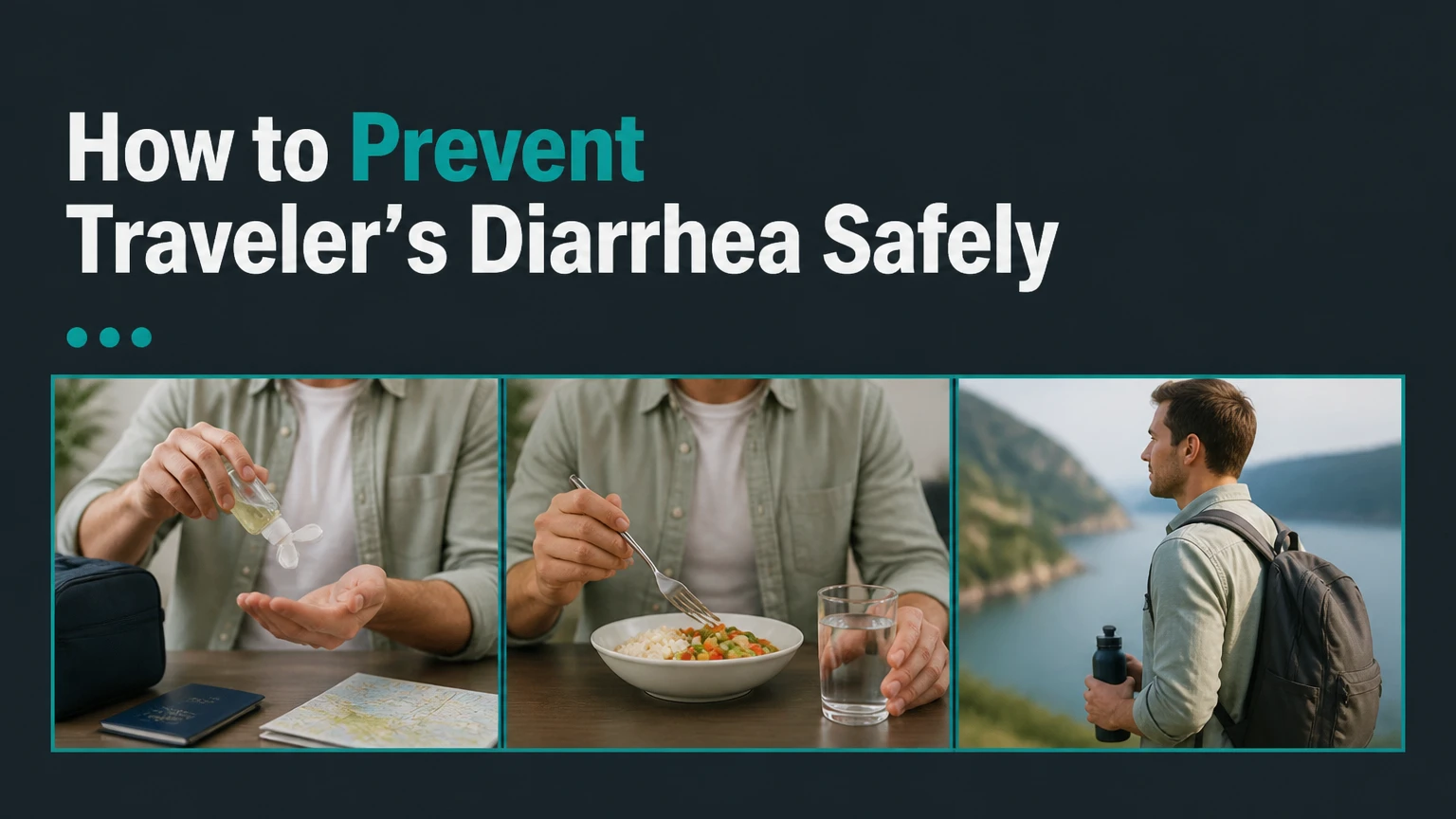
Wash hands with soap and safe water before eating and after using the toilet. Alcohol sanitizer is useful when hands look clean, but it is less reliable against some organisms and does not replace washing after visible contamination.
Do not assume a straw, bottle rim, cup, or utensil is clean because the beverage itself came from a sealed container. Wipe or avoid surfaces that repeatedly contact mouths, especially during group excursions.
Which Prevention Method Should You Choose?
No single intervention prevents every cause of travel-related diarrhea. Food and water precautions have broad benefits, bismuth offers medication-based risk reduction for selected adults, and antibiotics are reserved for unusual circumstances because resistance and adverse effects can outweigh convenience.
| Strategy | Typical protection or role | Typical cost | Main limitation |
|---|---|---|---|
| Food and water precautions | Broad exposure reduction, no dependable percentage | $0-$20 | Cannot prevent all cross-contamination |
| Bismuth subsalicylate | About 50% risk reduction in studies | $8-$25 | Four daily doses, salicylate restrictions |
| ORS | Prevents dehydration after illness begins | $5-$20 | Does not prevent infection |
| Probiotics | Evidence inconsistent by strain and destination | $10-$40 | No standardized preventive dose |
| Prescription antibiotic prophylaxis | High short-term protection in selected cases | $20-$150 | Resistance, side effects, and medical restrictions |
Is bismuth subsalicylate appropriate?
Bismuth subsalicylate can reduce the incidence of traveler’s diarrhea by approximately 50% when taken repeatedly, according to travel-medicine reviews summarized in CDC guidance. Product regimens vary, but adult preventive schedules commonly involve two tablets or 30 mL four times daily, with a clinician or pharmacist confirming the product strength and duration.
Bismuth can darken the tongue and stool, cause constipation, and interact with other medicines. Avoid it or obtain medical advice first if you have an aspirin or salicylate allergy, take anticoagulants, have significant kidney disease, are pregnant, or are giving it to a child or teenager recovering from a viral infection.
Bismuth is not a substitute for rehydration. It may reduce stool frequency, but it does not neutralize every pathogen and may mask deterioration if a traveler ignores fever, blood, or dehydration.
Should you take a preventive antibiotic?
Routine antibiotic prophylaxis is not recommended for most travelers. The Infectious Diseases Society of America and CDC emphasize antimicrobial stewardship because preventive antibiotics can cause adverse effects, select resistant organisms, and increase susceptibility to infections such as Clostridioides difficile.
A clinician may consider prophylaxis for a short, high-stakes trip involving severe consequences from illness, such as a critical expedition, an essential performance, or a traveler with selected medical vulnerabilities. Rifaximin and rifamycin-based options do not cover every invasive pathogen, while fluoroquinolones have important resistance and safety limitations.
The correct prescription depends on destination, age, pregnancy status, allergies, renal function, medication interactions, and local resistance. Do not use a destination chart from another traveler as a prescription.
Expert insight: The common planning error is treating antibiotic access as the primary prevention strategy. In practice, a sealed ORS supply, a thermometer, hand hygiene, and a clinician-approved treatment plan are safer assets because antibiotics do not correct dehydration and may be wrong for invasive or parasitic disease.
What Should You Do at the First Loose Stool?
The first response should protect hydration, identify severity, and stop additional exposures. Mild watery diarrhea without fever or blood can often be managed initially with ORS and rest, while systemic or invasive features require medical advice.
- Stop alcohol and avoid very sugary drinks, which can worsen osmotic diarrhea.
- Mix an ORS packet with the exact volume of treated water on its label.
- Take frequent small sips, especially after each loose stool or vomiting episode.
- Eat small portions of rice, bananas, bread, soup, potatoes, or other tolerated foods.
- Check temperature and note stool frequency, blood, vomiting, urine output, and dizziness.
- Use loperamide only for short-term control when there is no fever or blood.
- Contact a clinician if symptoms are severe, persistent, or medically risky.
Commercial ORS is preferable because its glucose and sodium concentrations are measured. If no packet is available, a commonly used WHO home mixture is 6 level teaspoons of sugar and one-half level teaspoon of salt in 1 liter of safe water. An incorrect salt concentration can be dangerous, so use packaged ORS as soon as possible.
When is loperamide unsafe?
Loperamide slows intestinal movement and can reduce urgency during a flight or work meeting, but it should not be used alone when diarrhea includes bloody stool, high fever, severe abdominal pain, or suspected dysentery. Slowing the bowel in invasive infection may worsen complications or delay treatment.
Adults should follow the package dose and maximum daily limit. Children need age-specific medical guidance, and young children should not receive antidiarrheal medication without a clinician’s instruction.
When are antibiotics considered treatment?
Antibiotics may shorten selected bacterial episodes, often reducing illness by roughly one day, but they do not treat viral gastroenteritis and may fail against resistant bacteria. Azithromycin is often preferred for invasive diarrhea or travel in areas with substantial fluoroquinolone resistance, but a prescriber must determine the indication and dose.
Seek professional advice before self-treating if you are pregnant, immunocompromised, over 65 with major medical conditions, or caring for an infant. A clinician may recommend stool testing when fever, blood, severe pain, outbreaks, recent antibiotic use, or prolonged symptoms changes the differential diagnosis.
Who Needs a Different Prevention Plan?
Children, pregnant travelers, older adults, and people with immune suppression can deteriorate faster or have fewer safe medication options. Their plans should prioritize safe fluids, access to care, and individualized medical advice rather than copying an adult traveler’s kit.
| Traveler group | Main concern | Safer planning priority | Medication caution |
|---|---|---|---|
| Infants and young children | Rapid dehydration | ORS, safe formula water, early clinical contact | Avoid unsupervised antidiarrheals |
| Pregnancy | Dehydration and limited drug choices | Vaccination review and obstetric advice | Avoid bismuth and antibiotics unless prescribed |
| Older adults | Kidney, heart, and medication risks | Medication reconciliation and hydration plan | Monitor fluid balance and interactions |
| Immunocompromised travelers | Severe or persistent infection | Destination review and low threshold for care | Prophylaxis and testing require specialist input |
| Inflammatory bowel disease | Flare versus infection | Written flare and infection plan | Avoid assuming every episode is a flare |
Breastfeeding should generally continue during maternal diarrhea with careful hand hygiene and adequate fluid intake, but the parent should ask a clinician about specific medicines. Infant feeding water must be treated even when adults tolerate local water without symptoms.
How Do Destination and Trip Type Change Risk?
Risk is not determined by a country label alone. Urban hotels, rural homestays, organized tours, camping, cruises, and humanitarian work expose travelers to different food systems, sanitation conditions, crowding, and access to treatment.
| Trip situation | Exposure pattern | Higher-risk behavior | Practical adjustment |
|---|---|---|---|
| Cruise or group tour | Shared meals and surfaces | Buffets, shared utensils, crowded excursions | Wash hands, avoid sick contacts, report outbreaks |
| Remote trek | Limited water and medical access | Untreated streams or poor storage | Carry a certified purifier, fuel, ORS, and backup plan |
| Business trip | Time-sensitive schedule | Skipped meals, airport food, dehydration | Pack ORS and choose freshly cooked meals |
| Rural homestay | Local water and household food | Raw produce, untreated dairy | Use treated water and eat food cooked hot |
| Resort vacation | Buffets and drinks | Lukewarm food, unknown ice | Choose hot food and sealed beverages |
No country is uniformly safe or unsafe. Season, rainfall, local outbreaks, sanitation infrastructure, and the traveler’s activities can change risk within the same destination.
What Mistakes Cause Preventable Exposure?
The most frequent mistakes involve small, repeated exposures rather than one obviously dangerous meal. A traveler may avoid street food yet ingest contaminated water while brushing teeth, eat raw cilantro on a cooked dish, or touch a buffet utensil before eating.
- Assuming an expensive hotel guarantees safe food
- Eating lettuce, raw herbs, salsa, or fruit washed in untreated water
- Drinking a sealed beverage with ice from an unknown source
- Accepting a bottle with a damaged or resealed cap
- Leaving cooked rice, noodles, meat, or seafood at room temperature
- Sharing cups, utensils, or snacks with someone who has vomiting
- Using sanitizer on visibly dirty hands instead of washing them
- Taking loperamide with fever or bloody stool
- Saving leftover antibiotics without checking the diagnosis
- Ignoring reduced urination, dizziness, confusion, or repeated vomiting
Expert insight: “Bottled water” is not a complete water-safety plan. Toothbrushing, ice, oral medicines, infant formula, and rinsing food create at least five additional water pathways that travelers routinely overlook.
When Does Diarrhea Require Medical Care?
Medical care is warranted for bloody stool, fever around 102°F or higher, severe or localized abdominal pain, fainting, confusion, inability to keep fluids down, very low urine output, or signs of shock. Infants, pregnant people, older adults, and immunocompromised travelers should seek advice earlier.
| Warning sign | Why it matters | Recommended response |
|---|---|---|
| Blood or black tarry stool | Possible invasive disease or bleeding | Urgent medical assessment |
| Persistent vomiting | Prevents oral rehydration | Same-day clinical advice |
| Fainting, confusion, minimal urine | Significant dehydration | Emergency evaluation |
| High fever with diarrhea | Possible invasive infection | Prompt medical review |
| Symptoms beyond 14 days | Possible protozoal infection or post-infectious disorder | Stool testing and evaluation |
| Severe pain or abdominal swelling | Possible complication beyond routine gastroenteritis | Urgent assessment |
Most uncomplicated bacterial or viral episodes improve within three to five days, but persistence changes the likely causes. Giardia, Cyclospora, Cryptosporidium, antibiotic-associated diarrhea, post-infectious lactose intolerance, and inflammatory bowel disease may require testing.
After returning home, tell the clinician where you traveled, when symptoms began, whether you used antibiotics, and whether anyone else became ill. Avoid preparing food for others while actively vomiting or having diarrhea, and follow local public-health advice for exclusion from work or school.
Frequently Asked Questions About How to Prevent Traveler’s Diarrhea
Can I eat salad while traveling?
Raw salad is safest only when the producer used treated water and hygienic handling, which a traveler often cannot verify. Choose cooked vegetables or produce you can peel yourself in higher-risk settings. A clean appearance does not establish that lettuce, herbs, or dressing avoided fecal contamination.
Do probiotics prevent travel-related diarrhea?
Probiotic evidence is inconsistent because results depend on the strain, dose, destination, and study design. No universal probiotic regimen reliably replaces food, water, and hand precautions. Travelers with severe immune suppression should ask a clinician before using live microbial products.
How much money should I budget for prevention?
A typical basic kit costs about $15-$50 for ORS, sanitizer, a thermometer, and symptom medication. A medical consultation, vaccines, water equipment, or a prescribed antibiotic can raise the total to approximately $30-$150, depending on insurance, destination, and prescription requirements.
Can alcohol disinfect contaminated food or water?
Alcohol in a drink does not reliably disinfect ice, garnishes, or contaminated food. Spirits also do not neutralize every pathogen at ordinary beverage concentrations. Treat the water source and avoid questionable ingredients regardless of whether the beverage contains alcohol.
Can I prevent illness by fasting before a trip?
Fasting does not prevent infection and can reduce energy reserves before heat exposure, long flights, or strenuous activities. Eat familiar, adequately cooked food, drink safe fluids, and avoid unusually rich meals if your stomach is sensitive.
What if diarrhea begins after I return home?
Start ORS, record fever and stool features, and contact a clinician if symptoms are severe or last beyond several days. Diarrhea continuing for two weeks or more needs evaluation for parasites and other causes, especially after travel to areas with unsafe water.
Conclusion
How to prevent Traveler’s Diarrhea safely comes down to layered risk control: obtain destination-specific medical advice, use treated water for drinking and brushing teeth, select food that is hot or peelable, wash hands, carry ORS, and reserve bismuth or prescription antibiotics for travelers who can use them safely. Seek care promptly for blood, high fever, severe dehydration, or persistent symptoms.